Learn HTML, CSS, JavaScript in Gujranwala: Complete Beginner Guide
Author : Muhammad Waheed
Learn HTML, CSS, JavaScript in Gujranwala: Complete Beginner Guide
1. Introduction
If you want to enter web development, starting with HTML, CSS and JavaScript is one of the most practical learning paths available. These technologies form the foundation of a large part of the modern web. HTML provides structure, CSS controls presentation and layout, while JavaScript adds programming logic and interactive behavior.
For students searching for opportunities to learn HTML, CSS and JavaScript in Gujranwala, the biggest challenge is not finding tutorials. There are thousands of free tutorials online. The real challenge is learning the technologies in the correct order, practicing consistently, understanding why the code works, fixing mistakes and eventually building complete projects.
That is where structured training can be useful. A good learning environment should combine practical hands-on training, an industry-focused curriculum, experienced trainers, real project learning and career guidance.
Students should also understand that learning HTML, CSS and JavaScript is not the same as becoming a professional web developer overnight. These technologies provide a foundation. Professional ability comes from repeated practice, project development, debugging and continuous learning.
2. What Are HTML, CSS and JavaScript?
HTML
HTML stands for HyperText Markup Language. It provides the structure of a webpage. Headings, paragraphs, links, images, lists, forms, tables, sections and many other webpage elements are represented through HTML.
HTML is therefore the structural layer of a website. Without understanding HTML, students will struggle to understand how webpages are organized.
CSS
CSS stands for Cascading Style Sheets. It controls how HTML elements appear on screen. Students use CSS to work with colors, typography, spacing, borders, layouts, positioning and responsive behavior.
CSS is particularly important for responsive websites because a page needs to work across different screen sizes.
JavaScript
JavaScript adds programming and interaction to websites. It can be used to respond to user actions, manipulate webpage elements, validate forms, communicate with servers and create more dynamic web applications.
JavaScript is significantly broader than basic webpage effects. As students progress, they can use it for serious application development and eventually explore modern JavaScript frameworks and libraries.
3. Why Learn HTML, CSS and JavaScript?
These three technologies provide an excellent foundation because they teach students how the browser works with webpages.
HTML teaches structure. CSS teaches presentation and layout. JavaScript teaches programming and interaction. Together, they help beginners understand the basic architecture of front-end web development.
Another advantage is immediate feedback. Students can write code, open a browser and see the result. This makes web development particularly suitable for practical learning.
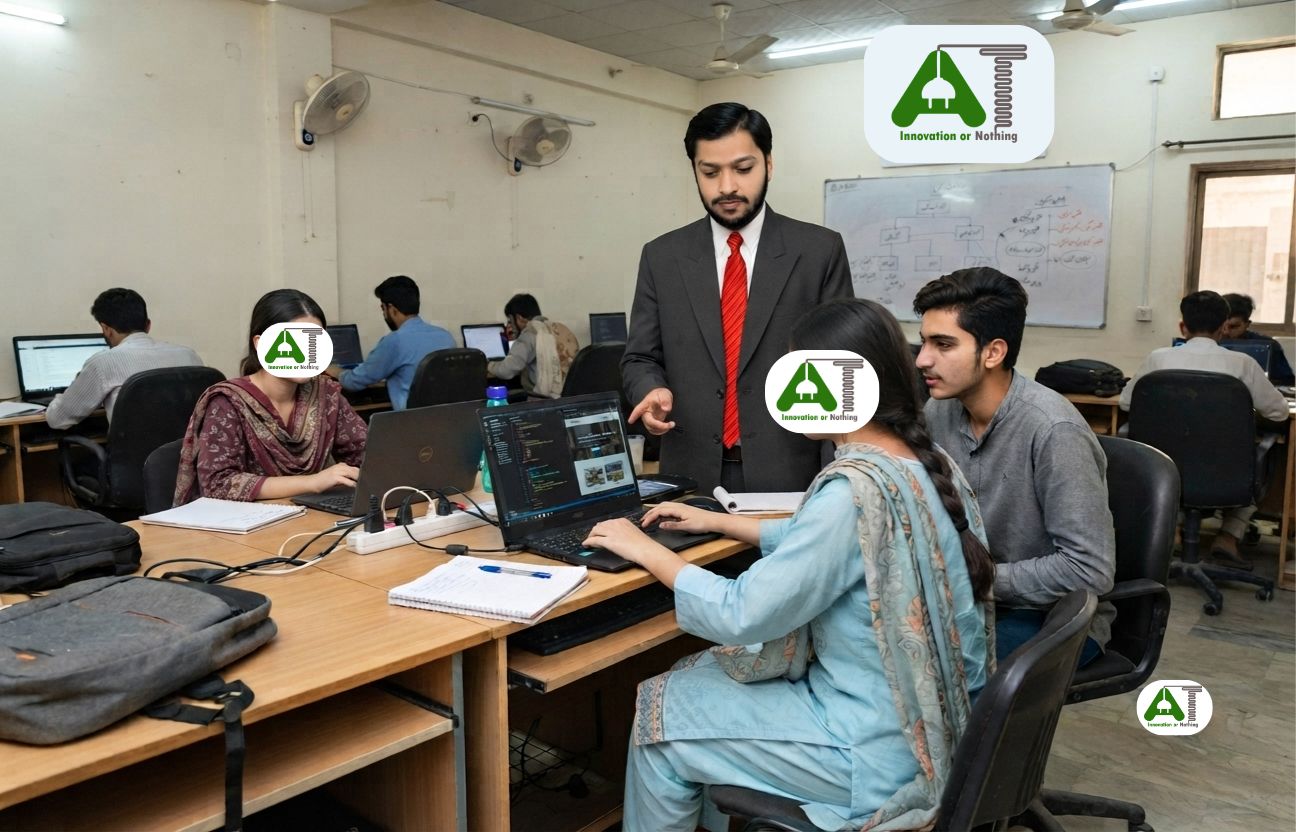
Students in Gujranwala can also benefit from learning locally if they prefer classroom interaction. Beginners often encounter small errors that can consume significant time when they are working alone. A trainer can identify such mistakes much faster.
The broader objective should not be simply to memorize HTML tags or CSS properties. Students should learn how to solve website problems.
4. Benefits
Strong Web Development Foundation
HTML, CSS and JavaScript are fundamental technologies for front-end development. A strong foundation makes later technologies easier to understand.
Practical Hands-On Training
Web development requires active practice. Students should write code, modify it, test it and debug it during training rather than only watching demonstrations.
Responsive Website Skills
Students learn how websites can adapt to smartphones, tablets, laptops and desktop screens.
Real Project Learning
Projects force students to combine individual concepts into complete websites. This is much closer to real development than isolated exercises.
Industry-Focused Curriculum
A useful curriculum should teach concepts that remain relevant even as individual frameworks and tools change.
Career Guidance
Students should understand how their skills can lead toward front-end development, broader web development, freelancing or further technical education.
Gujranwala-Based Learning Advantage
Local classroom learning can provide direct interaction with trainers, classmates and practical exercises while allowing students to maintain a structured schedule.
5. Skills Covered
- HTML document structure
- Semantic HTML
- Links and navigation
- Images and multimedia
- Forms and input fields
- CSS selectors
- Typography
- Colors and backgrounds
- Margins and padding
- Flexbox
- Grid layouts
- Responsive design
- JavaScript variables
- Conditions
- Loops
- Functions
- Arrays
- Objects
- Events
- DOM manipulation
- Basic debugging
- Project development
6. Course Learning Roadmap
Stage 1: Web Fundamentals
Begin by understanding websites, browsers, domains, hosting, files and folders.
Stage 2: HTML
Build static pages and learn how webpages are structured.
Stage 3: CSS
Transform basic HTML pages into visually organized and responsive websites.
Stage 4: JavaScript
Introduce programming concepts and interactive behavior.
Stage 5: Responsive Projects
Create websites that work on mobile and desktop screens.
Stage 6: Real Projects
Build business websites, portfolio pages, landing pages or other practical projects.
Stage 7: Next-Level Development
Once fundamentals are strong, students can move toward frameworks, backend development or full stack development.
7. Career Opportunities
HTML, CSS and JavaScript can provide the foundation for front-end development. Students may eventually pursue roles such as junior web designer, front-end developer, web developer, website support professional or freelance web developer.
However, the market rewards demonstrated ability. A student who can build a responsive website, troubleshoot browser problems and write clean JavaScript has considerably more value than someone who only possesses a course certificate.
8. Freelancing Opportunities
Beginners can potentially offer simple services such as responsive landing pages, business websites, website redesigns, HTML/CSS conversion, front-end fixes and JavaScript functionality.
Start small. Do not advertise yourself as an expert in every technology after a few weeks of study. Build a portfolio first and sell services you can actually deliver.
9. Why Choose Abiding Tech Education
Students comparing web development training in Gujranwala should look for an environment that provides practical hands-on training, industry-focused curriculum, experienced trainers, real project learning and career guidance.
A Gujranwala-based learning environment can be particularly useful for beginners who want direct support instead of relying entirely on self-learning.
Students can explore the Web Designing and Development course from Abiding Tech Education to review one of the supplied web-development training options.
10. FAQs
Can I learn HTML, CSS and JavaScript as a beginner?
Yes. They are commonly used as foundational technologies for learning front-end web development.
Which should I learn first?
Start with HTML, then CSS, and then JavaScript. Learning them in this order makes the relationship between structure, design and behavior easier to understand.
Can I get a job after learning these three technologies?
They can provide a foundation, but professional roles generally require practical projects and stronger development skills.
Can I freelance with HTML, CSS and JavaScript?
Yes. Beginners can offer suitable front-end services after developing sufficient practical ability and a portfolio.
Is classroom training better than YouTube?
Neither is automatically better. Free resources provide flexibility, while classroom training provides structure and direct support. Beginners should choose the method that helps them consistently practice and complete projects.
11. Conclusion with CTA
Learning HTML, CSS and JavaScript in Gujranwala can be a strong starting point for anyone interested in web development. But the goal should be practical competence rather than certificate collection.
Choose training that provides practical hands-on training, an industry-focused curriculum, experienced trainers, real project learning, career guidance and a supportive Gujranwala-based learning environment.
To explore a relevant training option, visit the Web Designing and Development course from Abiding Tech Education and compare its curriculum with your learning goals.
People Reviews
Based on 0 reviews